







|
| SHOW TITLE | DESCRIPTION OF SOUND Q |
AUDIO SAMPLE
click on the LINK below the description. This will enter a new window. |
|
For MACBETH OF TEH OPPRESSED, directed by Tom Slot
Here are some samples |
Sample 1 MOB_CELLOS 6Click here to listen or download and listen: Sample 2 MOB_CPLEX_CELLOPIANO1_PIPESClick here to listen or download and listen: |
|
For JUAN AND EMMETT, directed by Kelley Johnston, we wanted to create a sound that was both intimate and beautiful, yet had a slightly understated bit of dissonance - a sense of disturbance within something seemingly simple and delicate.
Here are some samples |
Sample 1 JE_02_TRANS01.mp3Click here to listen or download and listen: Sample 2 JE_18_TRANS14.mp3Click here to listen or download and listen: Sample 3 Click here to listen or download and listen: |

|
For PROOF, we wanted to create a complicated yet beautiful world. Interconnected and simple in its complexity.
Here are some samples |
Sample 1 Click here to listen or download and listen: Sample 2 Click here to listen or download and listen: Sample 3 Click here to listen or download and listen: Sample 4 Click here to listen or download and listen: Sample 5 Click here to listen or download and listen: |
|
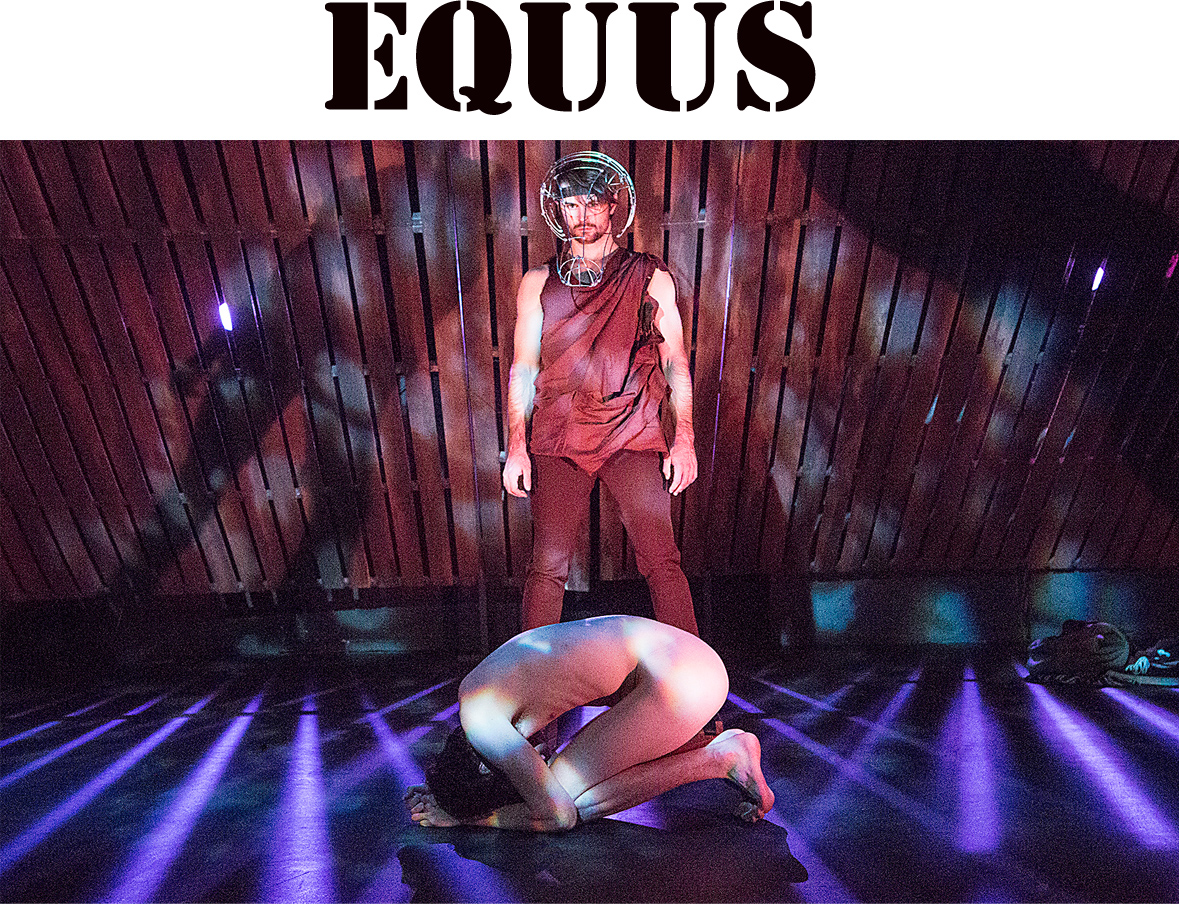
For Equus, we wanted to create a unique world, one that was both magical and one that felt enormous pressure. Using sound, we created two basic motifs: one of an Exultant nature, and one of a very Dark nature. Throughout the play, these to themes defined themselves, and blurred themselves. Here you have a sample of the Exultant, and of the Dark. |
Exultant Click here to listen or download and listen: Dark Click here to listen or download and listen: |
DOUBLES CROSSED: THE BALLAD OF RODRIGO
|
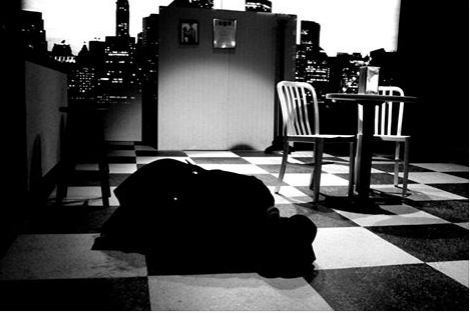
Doubles Crossed: The Ballad of Rodrigo, written by Jason Grossman, was a neo-film-noire theatrical adaptation. Jason created a beautiful stylized script, that fully embodied the film-noire of old, with a slight modern take Using sound, I wanted to create a theme that would play throughout the piece, with various variations to book end each scene. Here you have our opening moment, our prologue, which was designed to a memory of our antagonist, Rodrigo, recalling his fathers voice against our main theme. You then have various variations of our theme, orchestrated variously. |
Prologue VARIATION 1 Click here to listen or download and listen: SAMPLE 2 Click here to listen or download and listen: SAMPLE 3 Click here to listen or download and listen: SAMPLE 4 Click here to listen or download and listen: SAMPLE 5 Click here to listen or download and listen: SAMPLE 6 Click here to listen or download and listen: SAMPLE 7 Click here to listen or download and listen: SAMPLE 8 Click here to listen or download and listen: |
|
Lickspittles, Buttonholers, and Damned Pernicious GoBetweens, written by Johnna Adams, is a Napoleonic War era, triple-adversarial, espionage/romantic comedy thriller in Alexandrine verse.
While the majority of the play is brilliant in its unabashed absurdity, there is a series of moments just prior to the finale that is quite sincere and somber. The music to the right underscores the beginning of this series of events. This moment begins with the rebuilding of Marie Antoinette, as a marionette. The verse is quite unique, and of course describing the visual for what we see while we hear what we hear is quite impossible. I normally don't quote directly the text of a play, but in this particular case, I see no other way. The below is an excerpt from the play, the text is written by and fully owned by Johnna Adams: GUTHBERT: Close your eyes, so the harm I've done, I can undo. CANDINE closes her eyes and sights. GUTHBERT motions to the hold. STUB and PEDER enter, as they were told, with a couple of mops, some rope, a pail. They assemble a sort of mannequin near the rail. STUB takes out Marie Antoinette's wax head. It's no longer a fright, but instead a delight. The head has been dramatically transformed, a spectacular alteration performed. There is now an enormous wig of colorful hair twisted and curled with great care. The wig is adorned with birds and flowers. Someone has painted the face to erase Marie's final hours. CHRISTIENNE and EGLANTINE run in , too, the long, fanciful dress they hold makes its debut. The four of them put the head, dress and form together with flare. When they are done, Marie Antoinette has been conjured from air. CANDINE: This is ridiculous. This is some trick. More cruelty and spite. My god, you're a creature of lies! GUTHBERT: But not a cold-hearted villain. You can open your eyes. CANDINE opens her eyes. She gasps in surprise. The Copenhagen skyline come into sight. Dawn paints the ship in soft, pink light. |
Music Sample from Lickspittle, during the Marie Antoinette scene Click here to listen or download and listen: |
|
|
Earlier in the play, the protagonists create a "giant flying machine". The play takes place in a time far before anything could quite fly, but the absurdity of the play, calls for something that doesn't quite fit in any one time. To my right, is a clip of the Machine being built, a clip of the machine flying for the first time, and a clip of the machine encountering some in-flight technical difficulties.
|
Audio Sample from Lickspittle, the machine is built Click here if the quicktime player does not play: Audio Sample from Lickspittle, the machine first flies Click here to listen or download and listen: Audio Sample from Lickspittle, the machine encounters technical difficulties whilst flying Click here to listen or download and listen: |
|
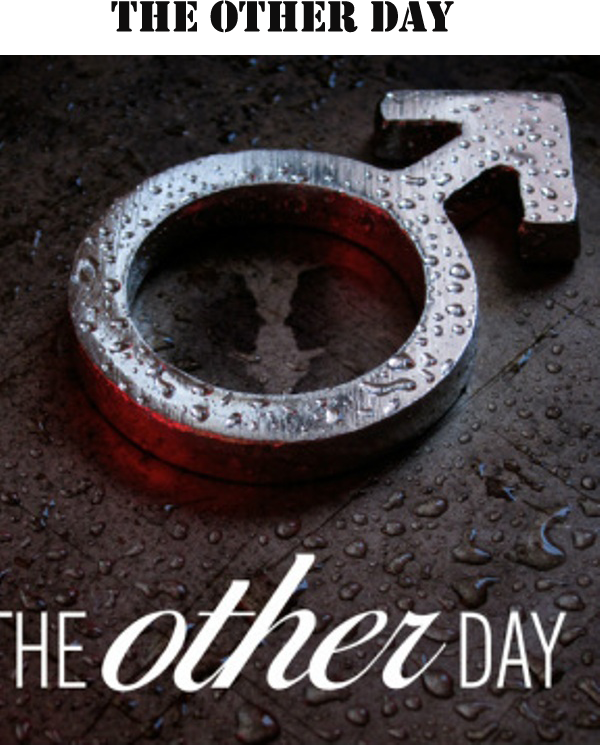
The Other Day, written by Mark Williams, is a piece that follows the story of Mark and Santo, as they embark on journey through love, insecurities, addiction, betrayal, loss, and redemption.
Using sound, we wanted to create a sense of the passing of time, while attempting to develop a sound that could also make us feel as though we were experiencing the memory of the story, through Mark and Santo. We wanted to create a sound that was rhythmic, interesting, but wouldn't drive the piece itself, and would rather let the piece drive the music. Here are several samples from the music we created for this piece. |
The Other Day music sample Click here to listen or download and listen: The Other Day music sample 2 Click here to listen or download and listen: The Other Day music sample 3 Click here to listen or download and listen: |
|
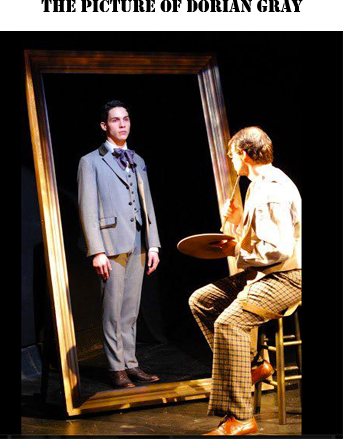
The Picture of Dorian Gray, as adapted by Glory Kadigan, was a very stylized staging of Oscar Wilde's novel. Thru sound, we developed an identity for the darkness intwined in the portrait. This sound grew and distorted our music as the piece progressed, climaxing when Dorian destroys the portrait.
Here are three Qs from this production. The first Q occurs after Sybil kills herself, and the painting begins to age. The second occurs when Dorian leads Basil to the school room, to show him the cursed portrait, and proceeds to kill him. The third Q is the climax, and Dorian finds no choice but to destroy the portrait, and in doing so, destroys himself. |
The painting Ages Click here to listen or download and listen: Dorian kills Basil Click here to listen or download and listen: Dorian destroys the portrait Click here to listen or download and listen: |
|
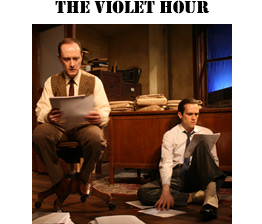
The Violet Hour takes place in the small office of a book publisher during the 1930s. At the beginning of the play, a strange machine is delivered. We never see this machine, we only hear it. The machine begins with a simple "ticking" noise, but slowly evolves and grows over the course of the play. It begins spewing pages from books printed in the future, and eventually, during the climax of the play, creates an "event" that turns back time, bringing us back to the start of the play.
The notion we had developed for the machine, was that it's evolutions would take us thru time, evolving from a simple printing press, to something from the "future", all while being it's own not-quite identifiable entity, and continually creating a sense of urgency and pressure. Here are several evolutions of the machine, as well as the "event" |
An example of one evolution of The Machine from "The Violet Hour"
Click here to listen or download and listen: An example of a later evolution of The Machine from "The Violet Hour" Click here to listen or download and listen: An example of one of the last evolutions of The Machine from "The Violet Hour" Click here to listen or download and listen: The Event from "The Violet Hour" (when the Machine reverse time) Click here to listen or download and listen: |

|
Without a Safety Net was about a young woman, Melody, who recently graduated from university, and is reflecting on her life, and where to go from here. For the sound, we tried to create the notion of memory, and chaos, and eventually finding harmony and clarity thru it all. Thru-ought the course of the piece, Melody's memories pile on, creating an increasing cacophony, until she eventually finds clarity. |
A sound Q from "Without a Safety Net" Click here to listen or download and listen: A sound Q from "Without a Safety Net" Click here to listen or download and listen: |
|
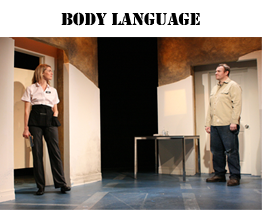
Body Language is a play about a young woman, Mary, who at first seems content and happy, but is at heart deeply troubled. Using sound, we tried to bring the audience into Mary's world, by beginning with a happy, upbeat piece of music, and slowly tearing it apart, distorting it with the voices of the characters of the play, building chaos and urgency until the climax, when Mary finally finds peace, and the voices and chaos subsides. |
A sound Q from "Body Language" Click here to listen or download and listen: A sound Q from "Body Language" Click here to listen or download and listen: A sound Q from "Body Language" |
|
Tulpa, or Anne and Me is a piece about a young woman, Star, who is struggling find her identity. While watching an Anne Hathaway DVD, Anne emerges from the television, and together they discover themselves. We used the sound to represent the surreal world that Anne lived in, and called upon it to transition from our world to hers, as well as used it within her world. |
A sound Q from the play "Tulpa or Anne and Me" Click here to listen or download and listen: A transition sound Q from the play "Tulpa or Anne and Me" Click here to listen or download and listen: |
|
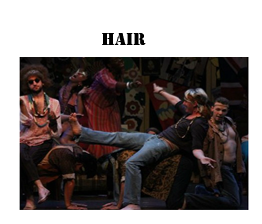
For Hair, we created a hellish, chaotic sound Q for our Protagonists bad acid trip, recalling various memories as well as being hounded by several characters form the play.
This is a long Q that develops over the course of the Q. Feel free to listen from the beginning, or skip ahead a few minutes to get the gist of it. |
A bad trip Sound cue from the play "Hair" Click here to listen or download and listen: |

|
Inhale is a piece about three people; one who needs a new lung, one who needs new eyes, and one mother who waits in the hospital waiting room after her daughter is in a fatal car crash.
The following sound Q introduced the piece, and was called upon, in modified forms, to transition between our three characters. |
Sound cue from the play "Inhale" Click here if the quicktime player does not play: |